
If you are over 40 and your body suddenly feels different, you are not imagining it.
Your jeans may feel tighter around the waist. Sleep may feel lighter. Your skin may look drier. Hair may show up in the brush more than before. You may feel tired, irritated, warmer at night, or less confident in your own body.
At first, many women blame stress, work, family, or “just getting older.” But when the same changes keep repeating, they are worth paying attention to.
This guide is not here to scare you. It is a simple checklist of body changes many women over 40 notice first — including the ones women often keep quiet about.
Quick checklist before you keep reading:
- Your waist or belly feels different
- Jeans fit tighter than they used to
- You wake up hot, sweaty, or tired
- Your hair looks thinner or sheds more
- Your skin feels drier than before
- You feel more rushed to find a bathroom
- Your mood or patience feels different
- Your confidence has changed
If a symptom is sudden, severe, painful, or interfering with daily life, speak with a qualified healthcare professional. If you have chest pain, trouble breathing, fainting, sudden weakness, heavy bleeding, or severe pain, seek urgent medical help.
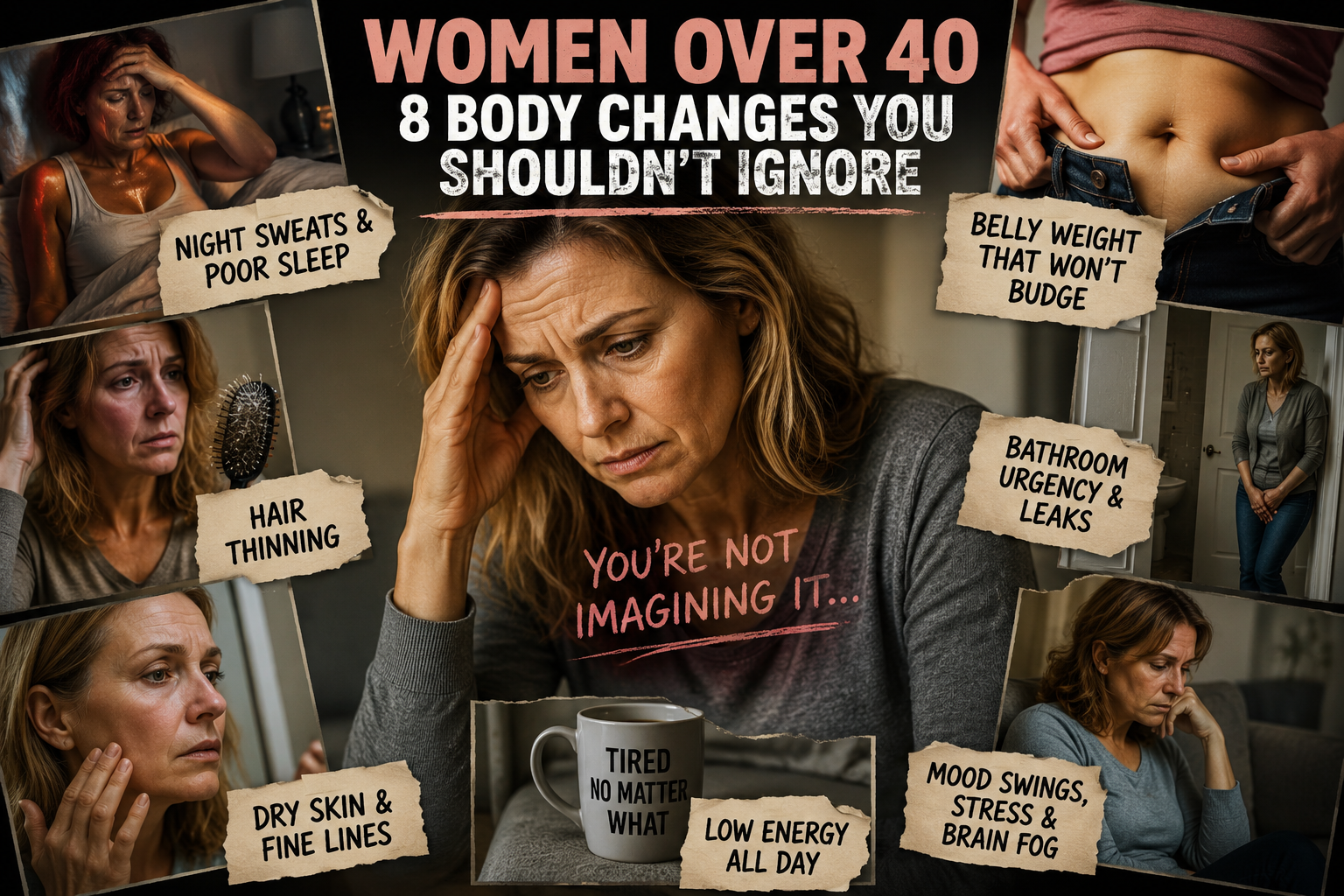
1. Waist and Belly Changes That Feel Sudden
One of the first changes many women notice after 40 is around the waist.
It can feel unfair. You may be eating the same meals, wearing the same clothes, and living the same routine — but your jeans suddenly feel tighter. The waistband digs in. Dresses fit differently. The mirror feels less familiar.
This does not mean you did anything “wrong.”
Body changes after 40 can be influenced by sleep, stress, hormones, activity level, muscle mass, eating patterns, alcohol, and normal aging. For many women, weight also starts showing up more around the stomach than it used to.
What to watch for:
- Your waist size changes faster than expected
- Jeans or work pants feel tighter around the middle
- Belly weight feels harder to lose than before
- You feel bloated more often
- You avoid certain clothes because your body feels different
- You feel frustrated because your old routine no longer works
The goal is not to panic or punish yourself with extreme dieting. A better first step is to notice the pattern.
Are you sleeping worse? Moving less? More stressed? Drinking more alcohol? Eating later at night? Skipping protein? These small habits can add up, especially when your body is already changing.
Start with simple things: more walking, more protein and fiber, strength training, better sleep, less alcohol, and fewer late-night snacks. Small changes done consistently are more useful than a dramatic plan you quit after five days.
2. Waking Up Hot, Sweaty, or Tired
Many women over 40 notice that sleep starts changing before anything else feels obvious.
You may fall asleep normally, then wake up at 2 or 3 a.m. feeling hot, restless, sweaty, or wide awake. You may wake up tired even after spending enough hours in bed.
This can be confusing because it does not always feel like a clear “health problem.” It can feel like a bad night. Then it happens again.
What to watch for:
- You wake up hot or sweaty during the night
- You throw off the blanket, then feel cold later
- You wake up around the same time most nights
- You feel tired in the morning
- You rely on coffee to get through the day
- Your mood feels worse after poor sleep
Night sweats, hot flashes, stress, alcohol, late meals, screen time, and inconsistent routines can all affect sleep quality.
Before changing everything, try a simple sleep reset for one week: keep the room cooler, reduce alcohol at night, avoid heavy meals before bed, put your phone away earlier, and keep a consistent bedtime.
If night sweats are intense, frequent, or new for you, it is worth discussing them with a healthcare professional.
3. More Hair in the Brush or Shower
Seeing more hair in the brush can hit hard.
For many women, hair is tied to identity, confidence, and feeling put together. So when shedding looks heavier than usual, it can feel scary.
Hair changes after 40 can happen for many reasons: stress, nutrition, hormones, thyroid issues, medication, major life changes, illness, or normal aging. Sometimes the change is temporary. Sometimes it needs a professional look.
What to watch for:
- More hair than usual in the brush
- More shedding in the shower
- A wider-looking part
- Hair that feels thinner at the ends
- Ponytails that feel smaller
- Breakage that seems worse than before
Do not rush into panic-buying every product online. Start by noticing the pattern.
How long has it been happening? Did stress increase recently? Did your diet change? Have you been sick? Are you sleeping poorly? Are you using more heat or tight hairstyles?
If shedding continues, gets worse, or comes with other symptoms like fatigue, weight changes, or skin changes, a healthcare professional can help you understand what may be going on.
4. Skin That Looks Drier, Duller, or Less Firm
Skin changes can be one of the most visible signs that your body is shifting.
You may notice makeup sitting differently. Your face may look tired even when you slept. Your neck may look less firm. Your skin may feel drier after showering. Fine lines may seem more noticeable than they did a few years ago.
This can feel frustrating, especially when it seems to happen suddenly.
What to watch for:
- Skin feels dry even after moisturizer
- Makeup settles into lines more easily
- Neck or jawline looks different
- Skin looks dull or tired
- You feel more sensitive to products
- Your old routine does not work the same way
A simple routine often works better than a crowded bathroom shelf.
Gentle cleanser, moisturizer, sunscreen, and patience are a better starting point than constantly switching products. Too many active products at once can leave skin feeling irritated, dry, or uncomfortable.
If your skin changes are sudden, painful, itchy, or severe, it is worth checking with a dermatologist or healthcare professional.
5. Bathroom Signals That Feel Harder to Ignore
This is one of the changes many women do not want to talk about.
After 40, some women notice they think about bathrooms more often. Maybe they plan errands around where the restroom is. Maybe coughing, laughing, workouts, or long drives feel more stressful than before.
It can feel embarrassing, but it is more common than many women realize.
What to watch for:
- You feel sudden urgency more often
- You use the bathroom “just in case” before leaving home
- Long car rides feel stressful
- Coffee makes urgency worse
- You feel nervous during workouts or coughing
- You avoid talking about it because it feels too personal
Daily habits can matter. Caffeine, alcohol, constipation, fluid timing, stress, pelvic floor changes, childbirth history, and other health factors may all play a role.
This is not something you have to silently live with. If bathroom urgency, leaks, pain, or frequent urination is affecting your life, talk with a qualified healthcare professional. Pelvic floor support and medical guidance can make a real difference for many women.
6. Mood, Patience, and Brain Fog Feel Different
Some women notice that their patience gets shorter after 40.
Small problems feel bigger. Work feels more draining. Family stress hits harder. You walk into a room and forget why. You reread the same sentence. You feel emotional and then annoyed that you feel emotional.
This does not mean you are “losing it.”
Sleep changes, stress, hormone shifts, busy schedules, caregiving, work pressure, and poor recovery can all affect mood and focus.
What to watch for:
- You feel irritated more easily
- You cry or snap faster than usual
- You feel mentally foggy
- You forget simple things more often
- You feel overwhelmed by normal tasks
- You feel unlike yourself
The first question is not “What is wrong with me?” The better question is: “What is my body dealing with right now?”
Poor sleep, low movement, too much stress, skipping meals, alcohol, and lack of support can all make mood and focus worse.
If mood changes feel intense, persistent, or affect your daily life, speaking with a healthcare professional or mental health professional is a smart step.
7. Confidence Changes in Your Body and Relationships
This is the part many women keep private.
When your body feels different, your confidence can change too. Clothes fit differently. Sleep is worse. You feel tired. Your skin, hair, belly, mood, or energy may not feel like they used to.
That can affect more than your mirror.
It can affect how you show up at work, how you dress, how social you feel, and how close you feel in your relationship.
What to watch for:
- You avoid mirrors or photos
- You wear clothes to hide instead of feel good
- You feel less comfortable with your partner
- You feel distant or less interested than before
- You compare yourself to your younger body
- You feel embarrassed instead of curious
This is not about vanity. Feeling disconnected from your body can affect daily confidence.
The goal is not to chase who you were at 25. The goal is to understand what your body is doing now and support it in a realistic way.
Start with the basics: sleep, movement, stress, food, hydration, sunlight, and honest conversations. If changes in intimacy, pain, dryness, mood, or confidence are affecting your relationship or quality of life, a healthcare professional can help you find the right next step.
8. Ignoring Checkups Because Life Is Too Busy
Many women are used to taking care of everyone else first.
Work. Kids. Parents. Bills. Groceries. Appointments. Family needs. By the time your own health comes up, it is easy to say, “I’ll deal with it later.”
But after 40, repeated body changes deserve attention.
You do not need to run to the doctor for every small change. But you also should not ignore patterns that keep coming back.
What to watch for:
- You cannot remember your last basic checkup
- You have not discussed new symptoms with a professional
- You ignore changes because you are too busy
- You search online but never get real answers
- You keep hoping it will go away
- You feel something is different but keep delaying it
Basic checkups can help you understand your baseline: blood pressure, cholesterol, blood sugar, thyroid concerns, weight changes, sleep issues, menstrual changes, and other common midlife questions.
You deserve answers that are better than guessing.
Final Thoughts
If your body feels different after 40, you are not alone.
Waist changes, poor sleep, night sweats, hair shedding, dry skin, bathroom urgency, mood changes, and confidence shifts can feel confusing when they show up quietly.
The mistake is not noticing these changes.
The mistake is pretending they do not matter.
Start with one small step:
- Track your sleep for one week
- Notice when symptoms happen
- Walk more often
- Add strength training
- Reduce alcohol at night
- Simplify your skincare routine
- Pay attention to caffeine and bathroom urgency
- Book a basic checkup if something keeps repeating
You do not have to fix everything at once. But you do deserve to understand what your body is trying to tell you.
This article is for informational purposes only and is not a substitute for professional medical advice, diagnosis, or treatment. If you have ongoing symptoms or concerns, speak with a qualified healthcare professional.